Blow Molding Sourcing: How to Cut Costs Without Cutting Corners
February 14, 2026 · 13 min read
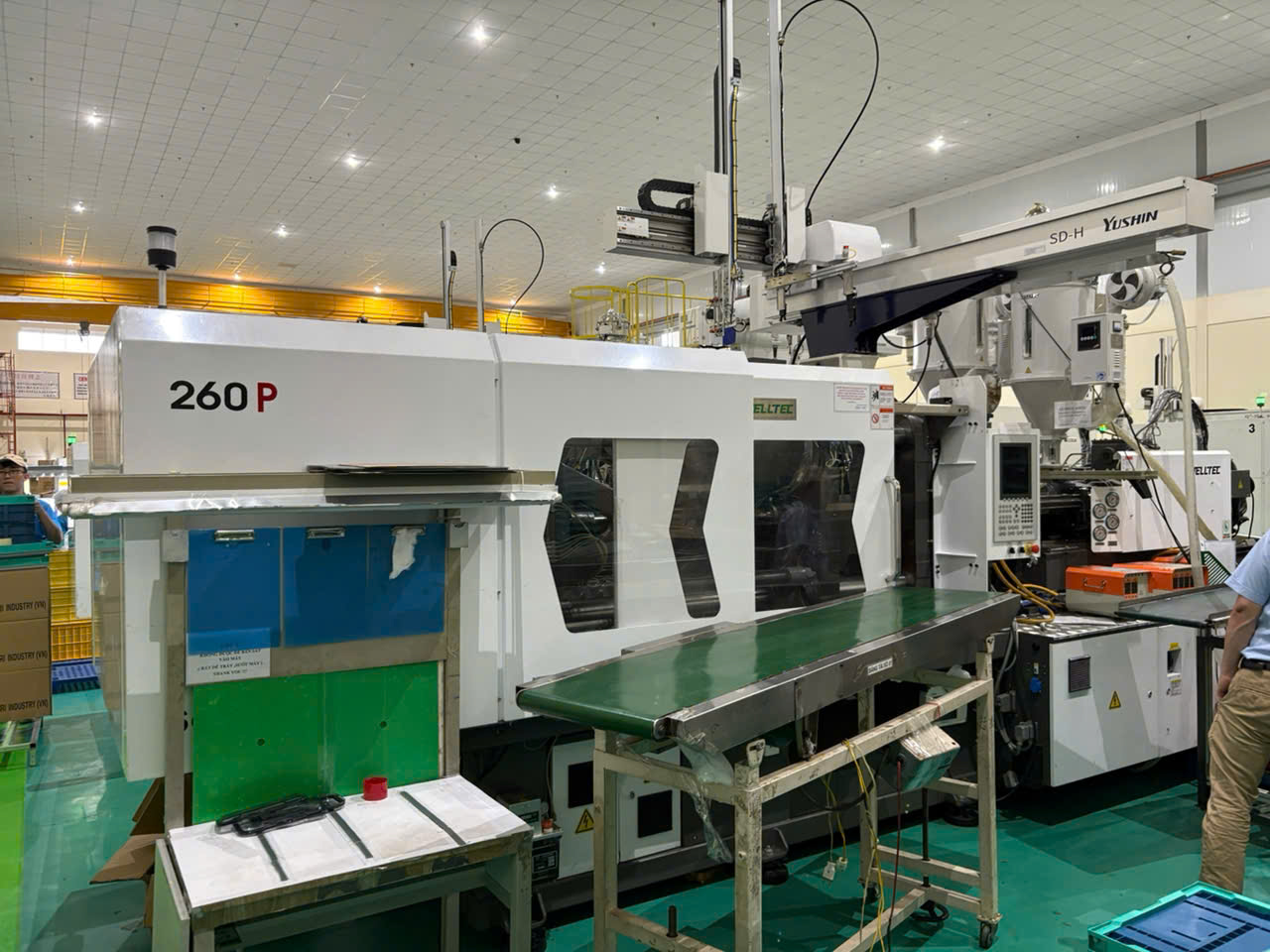
If your product has a hollow body — fuel tanks, reservoirs, ducting, bottles, industrial containers — blow molding is likely your process. But sourcing blow molded parts involves more nuance than injection molding: wall thickness variation, parison programming, and multi-layer barrier requirements add complexity that separates qualified suppliers from the rest. Here's what procurement managers and design engineers need to know.
Three Processes, Three Use Cases
- Extrusion Blow Molding (EBM): Extruded parison inflated at 4–8 bar. Best for >500ml parts — HDPE containers, automotive HVAC ducts, industrial tanks. Wall thickness tolerance: ±10–15%. Tooling: $8K–$35K offshore, $15K–$60K domestic. Cycle: 15–60 seconds.
- Injection Blow Molding (IBM): Injection-molded preform transferred to blow station. Tighter tolerance (±5%), superior thread accuracy. Pharmaceutical and small container sweet spot (<500ml). Tooling: $15K–$50K.
- Injection Stretch Blow Molding (ISBM): PET preforms biaxially oriented — 10–20% material savings vs. EBM through molecular alignment. The standard for beverage and food packaging where clarity and barrier properties matter.
RFQ tip: Specify which process you need, or describe your part and let the supplier recommend. A supplier that only offers EBM when your 50ml medical bottle needs IBM is a red flag.
Material Selection Matrix
| Material | Grade Example | Properties | Applications |
|---|---|---|---|
| HDPE | Marlex HHM 5502BN | 0.955 g/cm³, chemical resistant, -40°C to 80°C | Fuel tanks, chemical containers |
| PP | Braskem CP 360H | Higher stiffness, 100°C service, FDA grades available | Auto reservoirs, medical containers |
| PET | Eastman Eastar EN058 | Excellent clarity, 8–12× O₂ barrier vs. HDPE | Beverage, food packaging |
| ABS+PC | SABIC Cycoloy C1200HF | 500–650 J/m impact, UL94 V-0, -30 to 125°C | EV battery housings, enclosures |
| PA6 | BASF Ultramid B3K | 70 MPa tensile, 180°C peak, oil/fuel resistant | Charge air cooler pipes, air ducts |
Always specify the full resin grade, MFI range, and regulatory requirements (FDA 21 CFR 177, REACH, RoHS, UL) in your RFQ. "HDPE" is not a specification — "HDPE Marlex HHM 5502BN, MFI 0.35 g/10min, FDA 21 CFR 177.1520 compliant" is.
Tolerance Reality Check
Blow molding is not injection molding. Set expectations correctly to avoid costly rejects:
- Wall thickness: ±10–15% for EBM, ±5–8% for IBM. Minimum: 0.5mm (PET ISBM) to 1.5mm (HDPE EBM). Always specify min/max, not nominal.
- Dimensions: ±0.5mm/25mm for EBM; ±0.25mm on IBM neck/threads.
- Weight: ±2–3% shot-to-shot standard.
- Drop test: ASTM D2463 — specify height (1.2–1.8m) and temperature (23°C + -18°C for automotive).
- ESCR: ASTM D1693 — critical for HDPE chemical containers. Require F50 > 1,000 hours.
Cost Benchmarks: Offshore vs. Domestic
For a typical 2L HDPE container (200g, single-cavity EBM):
| Element | Vietnam | China (+25% tariff) | US Domestic |
|---|---|---|---|
| Tooling | $10K–$15K | $8K–$12K | $25K–$40K |
| Unit (10K pcs) | $0.35–$0.50 | $0.38–$0.56 (landed) | $0.80–$1.20 |
| Freight/unit | $0.02–$0.04 | $0.02–$0.03 | — |
| Tool + T1 lead time | 6–8 weeks | 4–6 weeks | 8–12 weeks |
Vietnam delivers 15–25% total landed cost savings vs. tariffed Chinese parts. The gap widens for larger parts where labor content is higher. Section 301 List 3 tariffs (25% on HTS 3923–3926) make China-sourced plastics increasingly uncompetitive.
Supplier Evaluation Checklist
- Machine capability: Tonnage range, head count, accumulator-head for >5L parts, multi-layer co-extrusion. Bekum, Kautex, Graham, or Nissei ASB machines indicate serious investment.
- Parison control: MOOG or REX programmers achieve ±5% wall distribution — ask for it.
- 100% leak testing: In-line pressure decay (≤0.01 bar loss / 30 sec) is non-negotiable for functional containers.
- Certifications: IATF 16949 (automotive), ISO 13485 (medical), ISO 9001 (minimum). UL listing if parts are flame-rated.
- Mold ownership clause: Your contract should explicitly state buyer ownership upon payment, IP protection, and right to transfer tooling.
- Secondary operations: Deflashing (automated vs. manual), printing/labeling, assembly — in-house capability reduces lead time and handling damage.
Design-for-Blow-Molding Tips
- Draft: Minimum 1° (EBM), 0.5° (IBM). More = fewer defects.
- Pinch-off: Bottom weld is the weakest point — design ≥3mm land width, radius internal corners.
- Handles: ≥15mm opening, ≥3mm wall to survive drop testing.
- Flash allowance: Budget $0.02–$0.05/part for automated trimming. Include trim line in your 3D CAD.
- Multi-layer fuel systems: EPA LEV III requires ≤0.2 g/m²/day permeation. Specify 6-layer: HDPE/regrind/adhesive/EVOH/adhesive/HDPE.
Ready to Source Blow Molded Parts?
Dewin connects you with qualified blow molding suppliers, from commodity HDPE containers to multi-layer automotive fuel systems. One quote request, multiple suppliers. Get started →