Aluminum CNC Machining Cost Guide 2026
February 16, 2026 · 12 min read
Aluminum is the most commonly CNC machined metal in the world. It cuts fast, holds tight tolerances, accepts a wide range of surface finishes, and comes in alloys optimized for everything from aerospace brackets to consumer electronics housings. But aluminum CNC machining costs vary wildly — by 5x or more — depending on alloy selection, part geometry, tolerances, quantity, and where you source.
This guide gives you real 2026 pricing data so you can budget accurately, spec parts intelligently, and negotiate from a position of knowledge.
What Drives Aluminum CNC Machining Cost?
Before looking at specific numbers, understand the five cost drivers that determine your per-part price:
- Material cost — AL6061-T6 bar stock runs $3–5/kg; AL7075-T6 runs $8–12/kg; specialty alloys like AL2024 sit in between at $6–9/kg. Material waste (buy-to-fly ratio) matters more than raw price for complex parts.
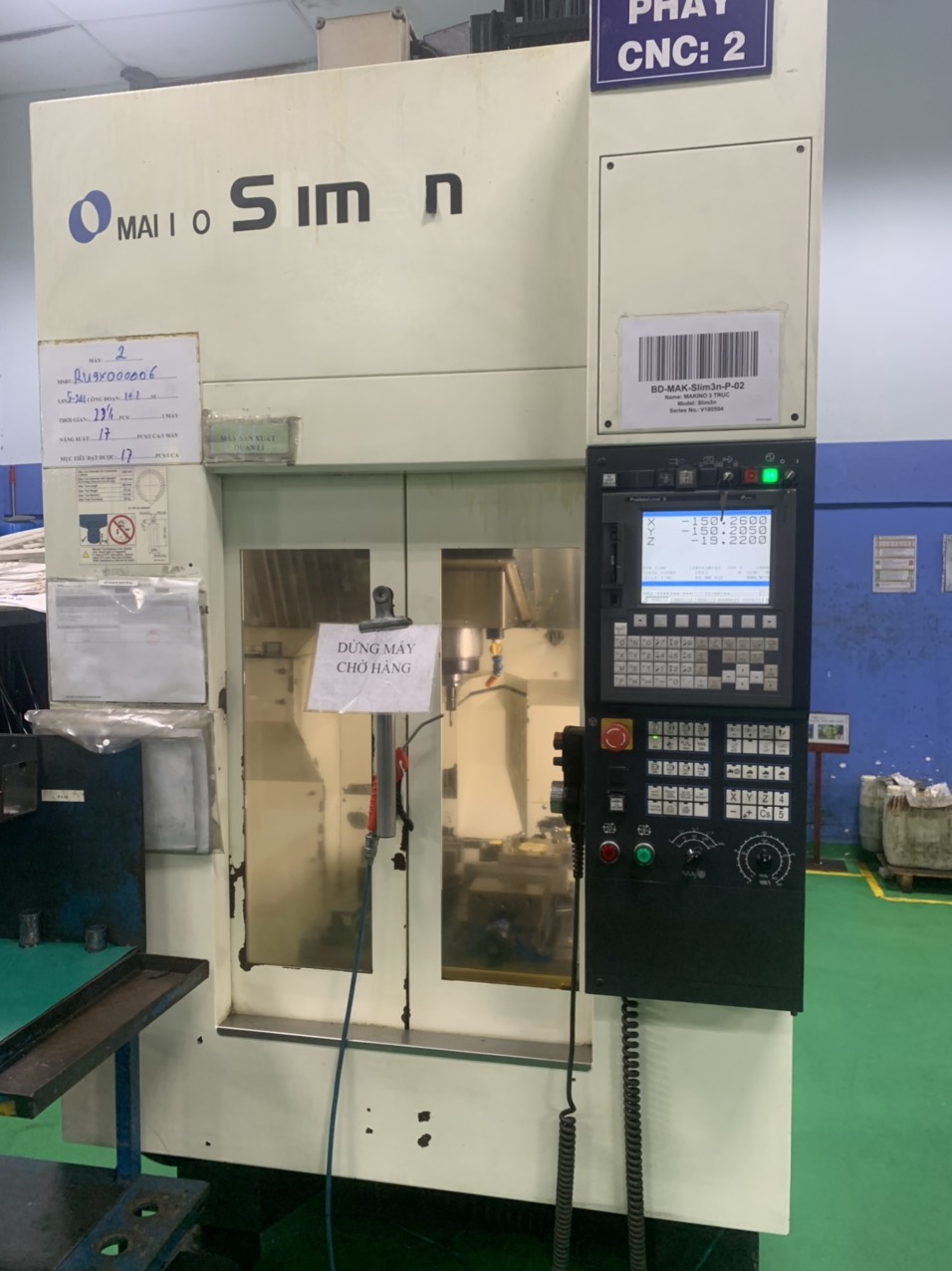
- Machine time — US shops charge $75–150/hr for 3-axis mills; $120–250/hr for 5-axis. Vietnamese shops run $25–45/hr for 3-axis; $40–80/hr for 5-axis. This is the single largest cost driver.
- Tolerance grade — Standard ±0.1 mm is included in base pricing. ±0.05 mm adds 15–25%. ±0.025 mm adds 40–60% and may require grinding. ±0.01 mm pushes into jig boring territory at 2–3x base cost.
- Setup complexity — Each fixture/setup costs $50–200 (offshore) or $150–500 (domestic). A part requiring 4 setups vs. 2 can double your unit cost at low volumes.
- Surface finish — As-machined (Ra 1.6 µm) is free. Bead blast adds $0.50–2/part. Anodize Type II adds $2–8/part. Hard anodize (Type III) adds $5–15/part. Powder coat adds $3–10/part.
2026 Per-Part Pricing: Real Benchmarks
These are actual quoted ranges from our supplier network, not theoretical estimates. All prices assume AL6061-T6 unless noted.
Simple Parts (1–2 setups, ±0.1 mm)
Think: brackets, spacers, plates, simple housings. 2D profiles with pockets and holes, no complex 3D contours.
- Qty 10: $15–40/part (US) · $8–20/part (Vietnam)
- Qty 100: $8–20/part (US) · $4–10/part (Vietnam)
- Qty 1,000: $5–12/part (US) · $2.50–6/part (Vietnam)
- Qty 10,000+: $3–8/part (US) · $1.50–4/part (Vietnam)
Medium Complexity (3–4 setups, ±0.05 mm)
Think: valve bodies, multi-pocket housings, parts with angular features, tight-tolerance bores. May need 4-axis indexing.
- Qty 10: $45–120/part (US) · $20–55/part (Vietnam)
- Qty 100: $25–65/part (US) · $12–30/part (Vietnam)
- Qty 1,000: $15–40/part (US) · $7–18/part (Vietnam)
- Qty 10,000+: $10–25/part (US) · $4.50–12/part (Vietnam)
High Complexity (5-axis, ±0.025 mm)
Think: aerospace brackets with compound angles, turbine components, medical device housings, parts requiring 5-axis simultaneous. Often AL7075-T6 or AL2024-T3.
- Qty 10: $100–350/part (US) · $50–160/part (Vietnam)
- Qty 100: $60–180/part (US) · $30–85/part (Vietnam)
- Qty 1,000: $35–100/part (US) · $18–50/part (Vietnam)
Alloy Selection: Cost vs. Performance
Your alloy choice affects material cost, machining speed, and post-processing options. Here's what matters for cost:
AL6061-T6 — The Default Choice
Best all-around alloy. Good machinability (rating: B+), excellent anodize response, 40 ksi yield strength, widely available globally. If you don't have a specific reason to use something else, use 6061. Material cost: $3–5/kg. Machine speed: 300–600 m/min SFM with carbide tooling.
AL7075-T6 — When You Need Strength
73 ksi yield strength — nearly twice 6061. Standard for aerospace brackets, jigs, and structural components. Costs 2–2.5x more in raw material. Machines slightly slower and wears tools faster. Does not anodize as uniformly as 6061 (slightly yellowish tint with Type II). Material cost: $8–12/kg.
AL5052-H32 — For Sheet and Plate
Best corrosion resistance of common alloys. Excellent for marine and outdoor applications. Not heat-treatable — only work-hardened. 28 ksi yield (H32 temper). Machines decently but creates stringy chips — not ideal for deep pocketing. Material cost: $4–6/kg.
AL2024-T3 — Aerospace Legacy
High fatigue resistance, commonly specified in legacy aerospace designs. 47 ksi yield. Poor corrosion resistance — must be clad or treated. Does not anodize well. Being phased out in favor of 7075 for most new designs. Material cost: $6–9/kg.
The Tolerance Tax: What Tight Specs Actually Cost
This is where most buyers leave money on the table. Over-tolerancing non-critical dimensions is the #1 unnecessary cost driver in CNC machining. Here's the real cost curve:
- ±0.1 mm (±0.004") — Standard milling tolerance. No cost adder. Achievable on any decent 3-axis mill.
- ±0.05 mm (±0.002") — Requires careful setup, sharp tooling, and may need a finishing pass. Adds 15–25% to machining time. Most Vietnam shops handle this routinely.
- ±0.025 mm (±0.001") — Requires precision fixturing, temperature-controlled environment ideal, slow finishing feeds. Adds 40–60% to machining time. Limit this to mating surfaces and critical fits.
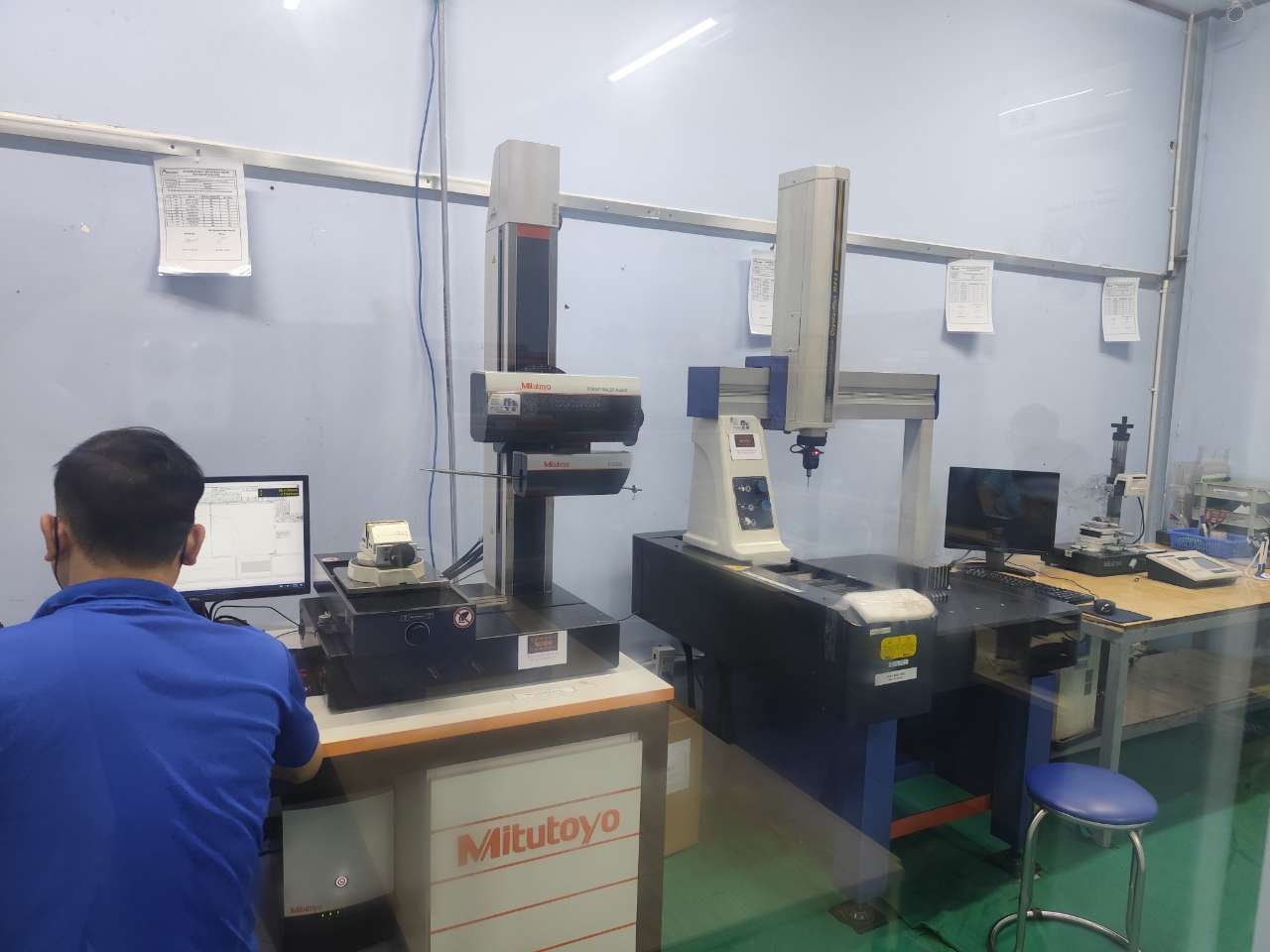
- ±0.01 mm (±0.0004") — Grinding or jig boring territory. 2–3x base machining cost. Requires 100% CMM inspection. Only specify when functionally necessary (bearing bores, seal grooves).
- ±0.005 mm (±0.0002") — Lapping or honing required. 4–5x base cost. Essentially precision grinding with verification. Rare outside aerospace and medical.
The rule: Identify the 3–5 critical dimensions on your part. Tolerance those tightly. Leave everything else at ±0.1 mm. This single practice typically saves 20–35% on CNC machining costs.
Surface Finish Options and Cost Impact
Surface finish is often the second-largest cost adder after tolerance. Here's what each treatment costs per part (100-piece batch, medium-size part):
- As-machined (Ra 1.6 µm) — Included in machining cost. Visible tool marks. Fine for internal/non-cosmetic parts.
- Bead blast — $0.50–2/part. Uniform matte finish, hides minor tool marks. Most popular cosmetic finish for prototypes.
- Anodize Type II (10–25 µm) — $2–8/part. Corrosion resistance + color options (clear, black, blue, red, gold). Adds 10–25 µm to all dimensions — account for in tolerances.
- Hard anodize Type III (25–75 µm) — $5–15/part. Hardness up to 70 HRC equivalent. Excellent wear resistance. Adds significant material — design critical fits pre-anodize. Dark gray/black only.
- Powder coat — $3–10/part. Thickest coating (50–100 µm). Best for outdoor/industrial parts. Wide color range. Not suitable for tight-tolerance mating surfaces.
- Electropolish — $3–8/part. Mirror-like finish. Common for medical and food-contact parts. Removes 5–10 µm of material.
- Chromate conversion (Alodine) — $1–3/part. Gold or clear iridescent. Excellent corrosion resistance with minimal dimensional change. Conductive — unlike anodize.
US Domestic vs. Vietnam: Landed Cost Comparison
Raw per-part price doesn't tell the full story. Here's a realistic landed cost comparison for a medium-complexity aluminum bracket (AL6061-T6, 4 setups, ±0.05 mm critical dimensions, bead blast + clear anodize):
Qty 500 Order
- US shop: $32/part × 500 = $16,000. Lead time: 3–4 weeks. No shipping cost.
- Vietnam (via Dewin): $14/part × 500 = $7,000 + $800 shipping (air freight, 40 kg) + $200 customs/duty (0% on most aluminum parts under CPTPP/MFN) = $8,000 landed. Lead time: 3–4 weeks production + 1 week air freight.
- Savings: $8,000 (50%)
Qty 5,000 Order
- US shop: $22/part × 5,000 = $110,000. Lead time: 5–6 weeks.
- Vietnam (via Dewin): $9/part × 5,000 = $45,000 + $2,500 sea freight (400 kg, LCL) + $500 customs = $48,000 landed. Lead time: 4–5 weeks production + 3–4 weeks sea freight.
- Savings: $62,000 (56%)
The savings scale with volume. At 5,000+ parts, ocean freight becomes viable and drops shipping cost per unit to under $1. The key trade-off is lead time — add 3–4 weeks for ocean shipping, or pay for air freight at ~$4–8/kg.
Tariff Considerations for US Buyers
Most aluminum CNC machined parts from Vietnam enter the US at standard MFN duty rates (HTS 7616: articles of aluminum, typically 2.5–5%). Vietnam is not subject to Section 301 tariffs — those apply only to China (25% on most manufactured goods). This means:
- Same part from China: base cost + 25% tariff
- Same part from Vietnam: base cost + 0–5% duty
- Net tariff advantage: 20–25% on top of already lower base pricing
If you're currently sourcing from China, the combined savings from lower base cost + tariff elimination is typically 45–65%.
How to Get the Best Price on Aluminum CNC Parts
Seven concrete actions to reduce your aluminum machining costs without compromising quality:
- Tolerance only critical dimensions. Review every GD&T callout. If a dimension doesn't affect fit, function, or assembly, relax it to ±0.1 mm.
- Design for fewer setups. Each setup adds cost. Orient features so maximum machining happens in 1–2 setups. Consult your machinist before finalizing CAD.
- Use 6061-T6 unless you have a reason not to. It's the cheapest, most available, and fastest to machine. Specifying 7075 when 6061 meets requirements adds 30–50% material cost for nothing.
- Batch similar parts together. If you have 5 different brackets using the same alloy, quote them as one package. Shared setup time and material purchasing reduce per-part cost.
- Specify finish requirements clearly. "Nice finish" is not a spec. State Ra value or reference standard (bead blast, anodize Type II black 15–20 µm, etc.). Ambiguity forces shops to quote conservatively.
- Provide 3D CAD + 2D drawings. Shops that receive only STL files will quote 20–30% higher because they must assume worst-case tolerances. Always include a dimensioned drawing with tolerances called out.
- Consider Vietnam for production quantities. Prototypes (1–10 pcs) are often best done locally for speed. Once you hit 50+ parts, the math favors offshore sourcing even with air freight.
Get a Quote in 24 Hours
Upload your drawings and we'll return a detailed quote within one business day — with per-part pricing, material certification, tolerance capability confirmation, and lead time. No minimum orders.